
Future of High-End Apparel—Integrating Sustainability into the Vertical Supply Chain
As global regulations tighten and consumer awareness peaks, the traditional divide between luxury craftsmanship and environmental responsibility is dissolving. Today, a truly eco-friendly fashion supply chain is defined not just by raw materials, but by the technological agility and ethical transparency of the manufacturing partner. Springtex serves as this trusted partner, bridging the gap between high-end aesthetics and sustainable integrity through our commitment to premium vertical manufacturing.
By leveraging our vertical manufacturing capabilities, we provide brands with total oversight of the production lifecycle, ensuring that ethical transparency is woven into every garment. Whether providing a comprehensive full package manufacturing solution or specialized artisanal development, Springtex empowers modern brands to scale responsibly without compromising on quality or speed-to-market.
The Architecture of Intent: Why Vertical Manufacturing Matters
Modern manufacturing has moved beyond simple outsourcing to a model of innovation partnership. For a high-end womenswear manufacturer, vertical integration—where everything from fabric development to final stitching is managed in-house—is critical for ensuring traceability. This structure allows for real-time production monitoring and rigorous quality control through advanced PLM Management and RFID tracking.
By leveraging technologies like 3D CAD rendering and AI design, leaders in the field like Springtex — for full package manufacturing and premium vertical manufacturing—are significantly reducing the waste associated with traditional physical sampling. Digital verification of fit and drape allows brands to achieve a "what you see is what you get" result, cutting sampling costs and lead times while minimizing the environmental footprint of the prototyping phase.
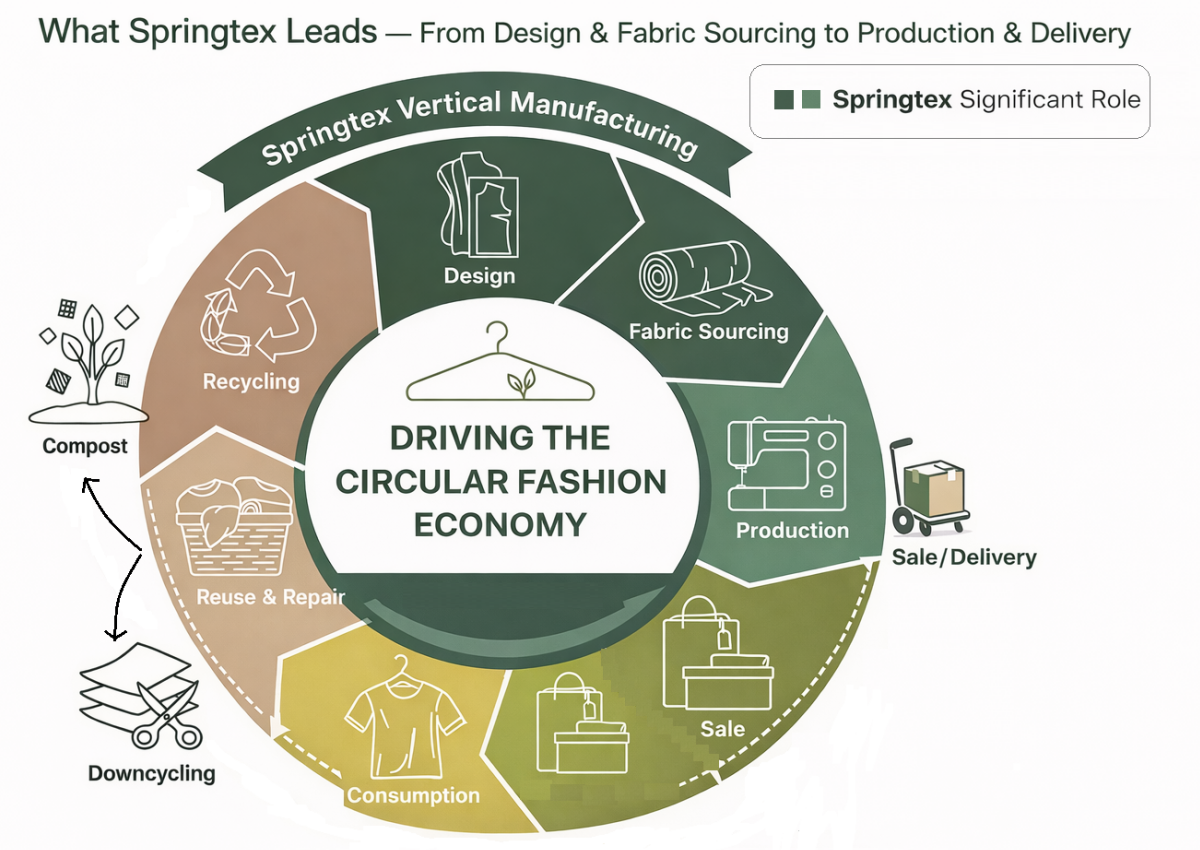
What Springtex Plays in the Circular Fashion Economy
Agility through the Small MOQ Vertical Manufacturing
One of the most effective strategies for reducing textile waste is the elimination of overproduction. The rise of the Small MOQ Vertical Manufacturing has empowered emerging and established labels alike to adopt a lean inventory model. Producing in small batches—often as low as 100 units—reduces financial risk and ensures that garments are only created when there is clear market demand.
This agility is particularly vital for the high-end sector, where quality and exclusivity are paramount. A smaller production run allows for a heightened focus on detail and craftsmanship that mass production often sacrifices. When a premium vertical manufacturing and a trusted partner coupled with ethical certifications such as WRAP or BSCI. These smaller scales support a supply chain that prioritizes human rights and fair wages just as much as environmental metrics.
BSCI-Certified Manufacturer
Authoritative Resources & Industry Standards
To understand the evolving landscape of sustainable fashion, these organizations provide the benchmark for ethical and environmental performance:
ØWRAP (Worldwide Responsible Accredited Production): The world's largest independent certification program for the apparel and footwear industry.
ØBSCI (Business Social Compliance Initiative), now known as amfori BSCI, is a global initiative and auditing framework to improve social performance and working conditions in global supply chains, ensuring ethical practices like fair wages, safe environments, and no child/forced labor, based on international labor standards. It's a system for companies to monitor their suppliers, promoting worker rights and responsible sourcing through audits that assess factories against a Code of Conduct.
The comparison of WRAP and BSCI (amfori BSCI)
Feature | WRAP | BSCI (amfori BSCI) |
Nature of Program | Certification: A facility is audited and awarded a certificate (Platinum, Gold, or Silver) upon meeting standards. | Continuous Improvement System: Not a certification. It's a monitoring system based on a Code of Conduct that encourages suppliers to improve over time. |
Primary Industry Focus | Apparel, footwear, and sewn products sectors. | Broad range of consumer goods, including textiles, food, electronics, etc. |
Geographic Focus | Often preferred by North American buyers and brands. | Often preferred by European buyers and retailers. |
Audit Outcome | A pass/fail certification with graded levels denoting compliance history. | An audit report with a score (A to E) indicating the level of maturity and areas for improvement. There is no "pass" or "fail". |
Core Principles | Based on 12 Principles centered on local laws and international workplace standards. | Based on a Code of Conduct with 11-13 principles referencing international conventions like the ILO and UN Guiding Principles. |
References
1. BSI Group (2025). From Source to Shelf: Creating Sustainable Fashion for the Future. Whitepaper on luxury fashion sustainability.
2. Supply Chain Digital (2024). The Progress of Circular Economy Innovation and Supply Chain Traceability in Luxury Brands.
3. NetZeroCities: Textile and Fashion Design for Circularity