
Consistency is Core: The Role of In-House Fabric Development in Vertical Manufacturing
In today’s fast-evolving fashion industry, consistency is no longer just a quality benchmark—it is a strategic advantage. For brands working with a garment factory, ensuring uniform quality across collections, seasons, and global markets is critical. This is where vertical manufacturing, particularly in-house fabric development, plays a critical role. By integrating fabric innovation directly into the production process, manufacturers can deliver superior consistency, speed, and control—elements that support long-term success.
Understanding Vertical Manufacturing in the Apparel Industry
Vertical manufacturing refers to a production model where multiple stages of the supply chain—such as fabric sourcing, development, dyeing, cutting, sewing, and finishing—are managed within a single organization. Unlike traditional fragmented supply chains, this integrated approach reduces dependency on external vendors and enhances coordination.
According to the McKinsey & Company State of Fashion Report (https://www.mckinsey.com/industries/retail/our-insights/state-of-fashion), brands are increasingly prioritizing supply chain transparency and agility. Vertical manufacturing directly supports these goals by consolidating operations and improving responsiveness to market demands.
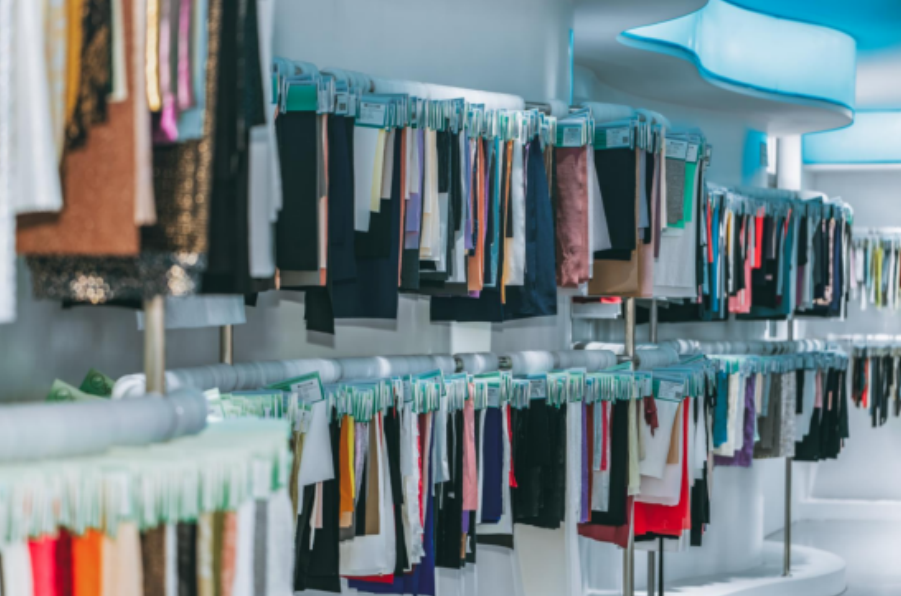
Fabric-Library-of-Springtex
Why Consistency Matters More Than Ever
Consistency in fabric quality, color accuracy, texture, and performance is essential for brand identity. Consumers expect that a product purchased today will match the quality of one bought months later. Any deviation can lead to dissatisfaction, returns, and reputational damage.
A study by Textile Exchange (https://textileexchange.org/) highlights that consistent material sourcing and development are key factors in maintaining sustainable and reliable production standards. Inconsistent fabrics not only affect garment quality but also disrupt production timelines and increase waste.
The Strategic Advantage of In-House Fabric Development
In-house fabric development is central to achieving true vertical manufacturing. By controlling fabric creation internally, a garment factory can ensure:
1. Quality Control from the Source
When fabrics are developed in-house, manufacturers can monitor every stage—from fiber selection to finishing. This eliminates variability caused by third-party suppliers and ensures that every batch meets strict quality standards.
2. Color Consistency Across Collections
Color matching is one of the biggest challenges in apparel production. In-house dyeing and fabric processing allow for precise color calibration, ensuring uniformity across different production runs. This is especially important for brands with signature colors or seasonal palettes.
3. Faster Sampling and Development Cycles
Speed to market is critical in today’s competitive landscape. According to Deloitte’s Global Powers of Retailing Report (https://www2.deloitte.com/), companies that streamline product development cycles gain a significant competitive edge. In-house fabric capabilities enable rapid prototyping, reducing the time between design and production.
4. Enhanced Innovation and Customization
With internal fabric R&D teams, manufacturers can experiment with new blends, textures, and finishes. This enables the development of exclusive materials that differentiate brands in crowded markets. Custom fabric development also allows brands to align materials with their design vision and functional requirements.
5. Improved Sustainability and Traceability
Sustainability is no longer optional. In-house fabric development provides greater visibility into material sourcing and processing, enabling better compliance with environmental standards. Organizations like the Global Organic Textile Standard (GOTS) (https://global-standard.org/) emphasize traceability as a key component of sustainable textile production.
Reducing Risk Through Vertical Integration
One of the hidden benefits of vertical manufacturing is risk mitigation. Global supply chains are increasingly vulnerable to disruptions—from geopolitical tensions to logistical delays. By consolidating fabric development and garment production under one roof, manufacturers reduce reliance on external partners and gain greater operational stability.
The World Trade Organization (WTO) (https://www.wto.org/) has reported ongoing fluctuations in global trade flows, reinforcing the need for resilient supply chain models. Vertical manufacturing helps brands navigate these uncertainties with greater confidence.
Case in Practice: From Fabric to Finished Garment
In a vertically integrated garment factory, the process begins with fabric concept development. Designers and textile engineers collaborate to create materials that align with the brand’s aesthetic and performance goals. Once approved, fabrics are produced, tested, and refined internally before moving into garment production.
This seamless transition between stages eliminates communication gaps and ensures that the final product reflects the original design intent. The result is a consistent, high-quality garment that meets both brand standards and customer expectations.
Meeting the Demands of Modern Brands
Today’s fashion brands demand more than just manufacturing—they seek strategic partners who can deliver reliability, innovation, and speed. Vertical manufacturing with in-house fabric development addresses these needs by offering:
· End-to-end production control
· Reduced lead times
· Consistent quality across orders
· Greater flexibility for customization
· Enhanced sustainability practices
As highlighted by Boston Consulting Group (BCG) (https://www.bcg.com/), companies that invest in integrated supply chain capabilities are better positioned to adapt to shifting consumer demands and market trends.
Conclusion: Consistency as a Competitive Edge
In an industry where details define success, consistency is the foundation of trust between brands and consumers. A garment factory that embraces vertical manufacturing and invests in in-house fabric development gains a powerful advantage—control over quality, speed, and innovation.
By integrating fabric creation into the production ecosystem, manufacturers can eliminate variability, accelerate timelines, and deliver products that consistently meet the highest standards. For brands seeking long-term growth and differentiation, partnering with a vertically integrated manufacturer is not just a choice—it is a strategic necessity.
Garment Factory and Vertical Manufacturing are no longer just industry terms; they represent a modern approach to apparel production where consistency, efficiency, and innovation come together to create lasting value.
References
1. McKinsey & Company – State of Fashion Report
https://www.mckinsey.com/industries/retail/our-insights/state-of-fashion
2. Textile Exchange
https://textileexchange.org/
3. Deloitte – Global Powers of Retailing
https://www2.deloitte.com/
4. Global Organic Textile Standard (GOTS)
https://global-standard.org/
5. World Trade Organization (WTO)
https://www.wto.org/
6. Boston Consulting Group (BCG)
https://www.bcg.com/
Fatal error: Allowed memory size of 134217728 bytes exhausted (tried to allocate 5222752 bytes) in /www/wwwroot/springtex.com/include/pdo.class.php on line 54