The Anatomy of a Modern Vertical Garment Factory
In the global fashion world, things move too fast for the old, fragmented way of doing things. If you’re looking for real agility and quality you can actually vouch for, the ‘vertical’ model isn’t just a trend—it’s become essential.
But what does that look like in practice? At Springtex, we’ve seen that the best partnerships start with total transparency. A modern vertical Apparel Factory isn’t just a room full of sewing machines; it’s where everything happens in one place. We take raw materials and turn them into finished pieces, keeping every step of the process under our own roof.
1. The Vertical Advantage: Integration over Fragmentation
A "vertical" factory integrates multiple stages of the supply chain. Unlike a standard Garment Factory that might only handle Cut-Make-Trim (CMT), a vertical facility manages everything from fabric development to final logistics.
· Speed to Market: By eliminating the need to ship fabrics between different vendors, lead times are slashed by weeks.
· Quality Consistency: Since the same entity oversees the knitting, dyeing, and sewing, there is a unified standard of quality.
· Cost Efficiency: Consolidating operations reduces overhead costs related to transportation and middleman markups.
2. Research and Development (R&D) & Design
The anatomy of a modern factory begins in the lab, not on the sewing floor. The R&D department is where innovation lives. Here, technicians work on:
· Fabric Engineering: Developing proprietary blends that offer moisture-wicking, antimicrobial properties, or high-stretch recovery.
· Digital Pattern Making: Utilizing CAD (Computer-Aided Design) software to create precise 3D prototypes, reducing the need for multiple physical samples and minimizing waste.
According to the International Apparel Federation (IAF), digitalization in the pre-production phase is the single most effective way to improve sustainability in the modern Apparel Factory.
3. The Textile Mill: The Heart of the Operation
In a vertical setup, the textile mill is integrated into the facility. This stage involves:
Knitting/Weaving: High-speed machinery converts yarn into greige fabric.
Dyeing and Finishing: This is a critical stage where color management systems ensure "lab dip" accuracy. Modern factories utilize OEKO-TEX® certified dyes to ensure the safety of both the environment and the end consumer.
Testing Labs: Every batch of fabric undergoes rigorous testing for pilling, colorfastness, and shrinkage before it ever reaches the cutting table.
4. Precision Cutting and Automation
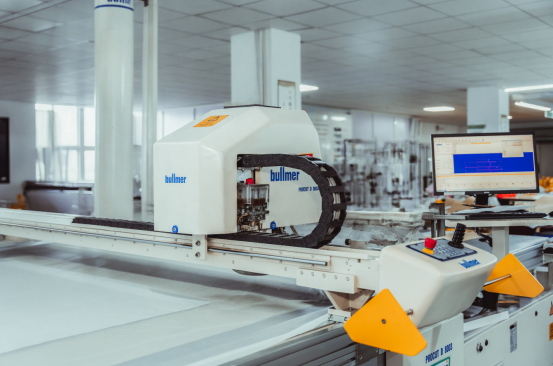
Once the fabric is approved, it moves to the cutting room. The modern anatomy of this department relies heavily on Automated Spreading and Cutting Machines.
By using algorithmic nesting, a vertical Garment Factory can optimize fabric consumption, ensuring that the "marker" (the layout of pattern pieces) utilizes up to 90% or more of the fabric. This drastic reduction in fabric scrap is a cornerstone of Circular Fashion initiatives.
5. The Sewing Floor: Lean Manufacturing
The "soul" of any Apparel Factory is the sewing line. However, the modern vertical model has moved away from traditional mass production toward Lean Manufacturing.
Modular Lines: Small, highly skilled teams work on specific garment types, allowing for faster changeovers between different styles.
Specialized Machinery: From four-needle six-thread flatlock machines for activewear to automated pocket setters for denim, the machinery is tailored to the product's technical requirements.
6. Quality Assurance (QA) and Compliance
A vertical factory doesn't wait until the end to check for errors. Quality is built into every stage of production:
1. In-Line Inspection: Checking garments at various stages of assembly.
2. End-of-Line Inspection: A final 100% check of every finished piece.
3. AQL (Acceptable Quality Level): Final random audits based on international ISO 9001 standards.
7. Sustainability and Ethical Labor
The anatomy of a factory is not just physical; it is ethical. A modern facility must adhere to global social compliance standards. This includes transparent wage structures, safe working conditions, and environmental management systems like Higg Index scores to track water and energy usage.
Note: Transparency has become a standard expectation in fashion.. Brands today demand to know not just where their clothes are made, but how the people making them are treated.
Conclusion
Navigating the complexities of global manufacturing requires a partner that understands the intricate Anatomy of a Modern Vertical Garment Factory. From the initial R&D and textile production to the final stitch and quality audit, the vertical model offers the control and transparency that modern brands require. At Springtex, we pride ourselves on being a leading Apparel Factory that integrates technology, sustainability, and craftsmanship to bring your visions to life.
By choosing a vertical Garment Factory, you aren't just buying a service; you are investing in a streamlined, ethical, and highly efficient production powerhouse.
Fatal error: Allowed memory size of 134217728 bytes exhausted (tried to allocate 16718136 bytes) in /www/wwwroot/springtex.com/include/pdo.class.php on line 54