
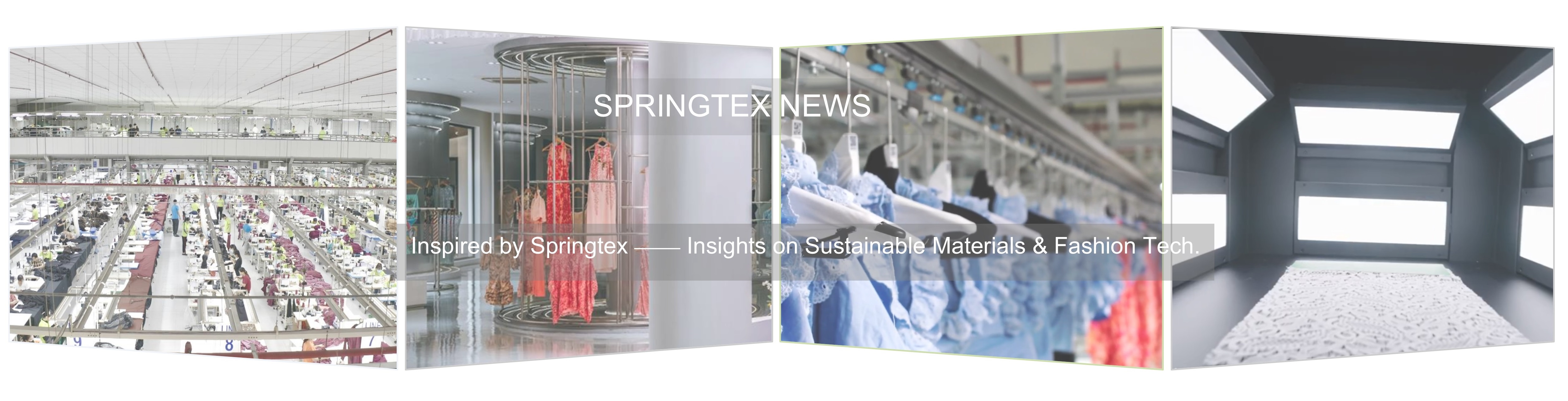
Nearshoring vs. Global Hubs: Why Vertical Units in Asia Still Win
Currently, the global supply chain is caught in a high-stakes tug-of-war. On one side is the allure of nearshoring; on the other, the sheer, calibrated power of established manufacturing hubs.
With shipping costs remaining volatile and geopolitical shifts continuing to impact global trade, it’s no surprise that Western brands are looking closer to home—scouting Mexico for the US market or eying Turkey and Eastern Europe for the EU.
But when you move past the "fast and local" hype and look at the total cost of ownership, the math starts to change. Speed alone is not a substitute for infrastructure. For brands where quality isn't just a buzzword, premium vertical manufacturing in a traditional apparel hub is still the gold standard. It highlights the distinction between geographic proximity and operational capability.
The Nearshoring Mirage: Speed vs. Substance
Nearshoring is often positioned as a solution to the accelerated timelines of today’s fast fashion market. The argument is simple: shorter shipping distances mean faster replenishment. While this holds true for basic "cut-and-sew" operations, it often falls apart when complexity is introduced.
Most nearshoring locations act as assembly points rather than origin points. They often lack the local raw material infrastructure—the mills, dye houses, and trim manufacturers—needed for a seamless operation. This creates a "double transport" problem: fabric is shipped from Asia to a nearshore location, only to be sewn and sent to the final destination. This fragmentation leads to:
Increased Lead Times: Ironically, waiting for material imports can take longer than shipping finished goods from an integrated hub.
Quality Variance: Fragmented supply chains increase the number of "hand-off" points where errors can occur.
Higher Costs: According to The World Bank's Logistics Performance Index, the efficiency of established Asian hubs in handling high-volume, high-complexity exports remains significantly higher than most emerging nearshore markets.

The Power of Premium Vertical Manufacturing
In contrast, Premium Vertical Manufacturing represents a "one-roof" philosophy. In a vertical unit, the distance between the yarn spinning and the final quality inspection is measured in meters, not miles. This proximity within a single facility is the ultimate driver of value.
1. Technical Synergy
In a vertical facility, the design team works in the same building as the fabric engineers. If a specific knit tension is required for a performance garment, the adjustments are made in real-time on the knitting floor. This synergy is nearly impossible to achieve when your fabric supplier is in a different country than your sewing line.
2. Cost Compounding
By eliminating the markups of multiple middle-tier suppliers, vertical units offer a price-to-quality ratio that is unbeatable. As McKinsey & Company notes in their "State of Fashion" reports, greater vertical integration within the supply chain is a key differentiator for brands maintaining healthy margins in a volatile market.
Why the Asian Apparel Hub Still Dominates
Asia—specifically regions with decades of textile heritage like Ningbo or the Pearl River Delta—has evolved from a low-cost labor source into a high-tech Apparel Hub. These hubs are no longer just about "cheap" production; they are centers of innovation.
· Infrastructure Maturity: The concentration of specialized machinery (ultrasonic welding, laser cutting, automated 3D knitting) in these hubs is decades ahead of nearshore alternatives.
· Skilled Workforce: These regions possess generations of specialized textile manufacturing expertise
· Regulatory Alignment: Major Asian hubs have spent the last decade aligning with global standards like ISO 9001, WRAP, and OEKO-TEX. They are ready for the upcoming Digital Product Passport (DPP) requirements, offering a level of data transparency that newer manufacturing regions struggle to provide.
Flexibility: The True Meaning of Speed
True speed in fashion isn't just about shipping time; it's about the "Time to Market" for a new design. A vertical manufacturer can go from a digital tech pack to a finished, lab-tested sample in a fraction of the time it takes a fragmented nearshore supply chain to source the necessary components.
At Springtex, we provide clients with the ability to pivot. When a specific color trends on social media, a vertical unit can dye the fabric and begin production immediately, whereas a nearshore factory must wait for an international fabric shipment to arrive.
Environmental and Ethical Scale
Sustainability is easier to manage when the chain of custody is short. A vertical unit controls its own water treatment plants, solar energy intake, and waste management. In a fragmented nearshore model, a brand might know who sewed the shirt, but they rarely know the environmental impact of the mill that provided the fabric.
Organizations like the Sustainable Apparel Coalition (SAC) emphasize that the highest impact areas of a garment's life cycle are in the "Tier 2" (fabric) and "Tier 3" (yarn) stages. By consolidating these tiers, a vertical manufacturer provides a cleaner, more auditable environmental footprint.
Conclusion
The debate between nearshoring and global hubs is not just about geography; it is about the architecture of production. While nearshoring may suit low-complexity, high-turnover items, the future of the industry belongs to those who prioritize the depth and reliability of Premium Vertical Manufacturing. By leveraging the immense technological and logistical advantages of a top-tier Apparel Hub, brands can achieve a level of consistency and innovation that regional proximity simply cannot buy. In the long run, the efficiency of an integrated Asian unit proves that Nearshoring vs. Global Hubs: Why Vertical Units in Asia Still Win is a matter of choosing substance over distance.
Fatal error: Allowed memory size of 134217728 bytes exhausted (tried to allocate 16718136 bytes) in /www/wwwroot/springtex.com/include/pdo.class.php on line 54