Why Working with a Clothing Manufacturer in China Offers Unmatched Supply Chain Speed
Every apparel brand has lived through this moment: a style is trending, the sales data is screaming "reorder now," and the factory quotes you a lead time that means the trend will be dead before the goods even clear customs. Speed isn't a nice-to-have in fashion anymore — it's the difference between capturing a season and missing it entirely. And when brands compare sourcing regions on that single axis, one market keeps coming out ahead: China.
If you're currently weighing China vs Vietnam manufacturing, researching high-quality apparel production options, or just trying to figure out how to find a clothing manufacturer that won't leave you sitting on a 16-week lead time, this breakdown lays out exactly where China's speed advantage comes from — and where it doesn't apply.

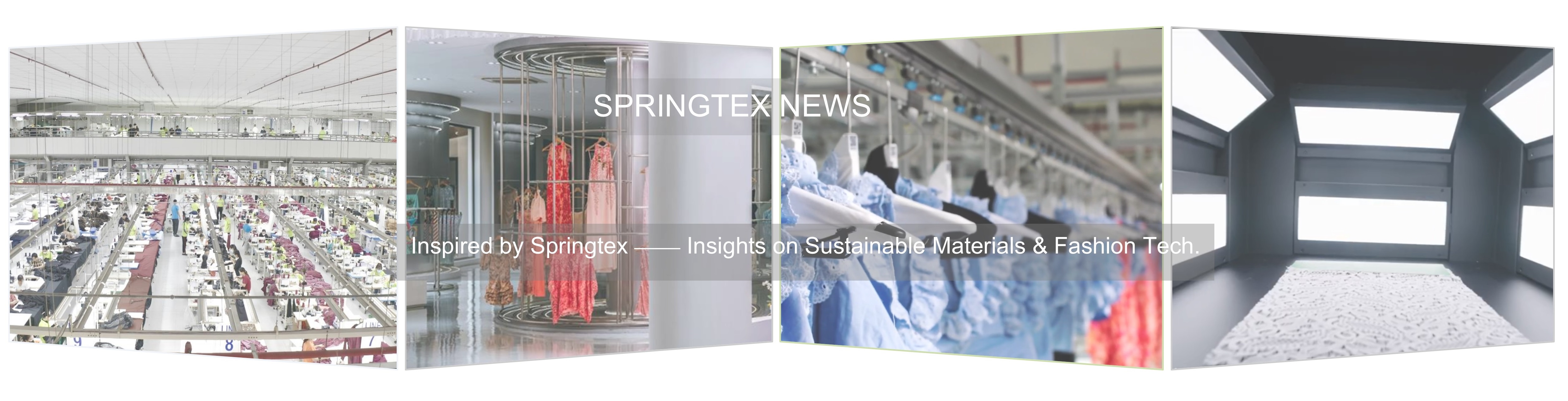
Springtex, a vertically one-stop apparel manufacturer, where fabric, cutting, and sewing happen under one roof
The Root of China's Speed: A Complete Supply Chain in One Place
Speed in apparel manufacturing isn't really about how fast a sewing machine runs. It's about how many border crossings, phone calls, and shipping containers stand between a fabric mill and a finished garment. This is where China's structural advantage shows up most clearly.
China contributes over 30% of global textile output, with spinning, weaving, dyeing, and finishing largely handled inside one integrated domestic system — which reduces reliance on imported materials and limits exposure to the delays and currency swings that come with cross-border sourcing. Compare that to a market like Vietnam, which still imports roughly 60–80% of its raw textile materials, predominantly from China itself. Every imported yarn or trim adds customs clearance time, freight time, and a link in the chain that can break.
In practice, that means a Chinese factory can often source fabric, dye it, cut it, sew it, and finish it within the same industrial cluster — sometimes the same city — while a Vietnamese factory may be waiting on a container of Chinese-milled fabric to clear the border before production even starts.
The "Small-Batch, Fast-Reaction" Model
Coastal manufacturing hubs in China have formalized this speed advantage into a specific operating model known as "small-batch, fast-reaction" production. The model lets brands test a new style with orders as small as 100–300 pieces, then scale production up or down based on real-time sales performance instead of a single, high-risk seasonal bet placed months in advance.
This is a meaningfully different way of manufacturing than the traditional bulk-order, long-lead-time model most Vietnamese and Bangladeshi factories are built around, and it's a major reason fast-fashion and direct-to-consumer brands continue to concentrate testing and reorder production in China even as they diversify bulk manufacturing elsewhere.
Here's a simplified look at how the two models compare in practice:
China vs Vietnam Manufacturing: A Fair Comparison
It would be misleading to present China as strictly "faster and better" — the honest answer, and the one most experienced sourcing teams land on, is that the two markets solve different problems.
Where China wins:
Shorter lead times for reorders and fast-turn production, thanks to the integrated domestic supply chain
Lower MOQ flexibility — many factories accommodate runs in the low hundreds
Deeper specialization in technical and engineered product categories, including performance fabrics, complex trims, and proprietary constructions
A broader bench of factories at every price and quality tier, built over decades of export experience
Where Vietnam wins:
Preferential trade access to the EU (EVFTA) and CPTPP markets, which can meaningfully reduce landed cost for brands exporting there
Strong performance in large-volume, standardized production runs
A workforce increasingly specialized in wovens, knits, and technical apparel for major global brands
Most sophisticated apparel companies don't pick one country and abandon the other — they use both strategically: China for fast-reaction testing, technical categories, and reorders; Vietnam (or a blended footprint) for large, trade-agreement-optimized production runs. Just as Springtex does, a manufacturing partner with a genuine presence in both markets gives a brand the flexibility to route each order to wherever it makes the most sense, instead of forcing every style through a single supply chain regardless of fit.

How to Find a Clothing Manufacturer That Actually Delivers on Speed
Plenty of factories will claim fast turnaround in a sales pitch. Fewer can actually back it up. Here's what to verify before committing:
Ask where the fabric comes from. If a "fast" factory is waiting on imported fabric, its real lead time is someone else's customs timeline, not its own capability.
Check MOQ flexibility against your actual order size. A factory quoting a 3,000-unit minimum isn't going to help you test a new style quickly, no matter how fast their sewing floor is.
Ask about reorder lead time specifically, not just first-order lead time. First orders always take longer because of sampling and approvals — the real speed test is how fast a factory can turn a repeat order once patterns and specs are locked.
Confirm vertical integration. Factories that control fabric sourcing, cutting, sewing, and finishing in-house avoid the handoff delays that come with subcontracting each stage to a different vendor.
Request references or case studies from brands with similar order profiles — a factory optimized for 10,000-unit basics may not be the right fit for a 300-unit technical launch, and vice versa.
A Typical Fast-Reaction Production Timeline
Below is a realistic timeline for a reorder-style run once a style is already sampled and approved:
Week 0 Order confirmed + fabric allocated
↓
Week 1 Fabric cut, bulk dyeing/finishing (if needed)
↓
Weeks 2–4 Sewing, trims, assembly
↓
Week 5 Quality control + final inspection
↓
Weeks 5–6 Packing, labeling, export documentation
↓
Weeks 6–8 Shipped and in transit to destination market
That 4–8 week window is what separates a reorder that captures a live sales trend from one that arrives after the trend, and demand, has already moved on.
Final Thoughts
Supply chain speed isn't a marketing slogan — it's the outcome of a specific structure: domestic fabric sourcing, vertical integration, and a factory model built for fast-reaction production instead of only bulk seasonal orders. That's the core of China's advantage over most alternative sourcing markets, Vietnam included, even as Vietnam continues to build real strength of its own in trade-agreement-driven, large-volume production.
For brands actively comparing China vs Vietnam manufacturing, chasing high-quality apparel production, or still working out how to find a clothing manufacturer that fits their order size and timeline, the right move is usually not choosing a country in the abstract — it's finding a manufacturing partner who can tell you honestly which model fits your product, volume, and market.
Ready to see whether a fast-reaction production model fits your next collection or reorder? Fill out our short inquiry form and our team will follow up with lead times, MOQs, and next steps for your project: Get in touch with Springtex →
References
World Trade Organization — World Trade Statistical Review 2024
European Commission — EU–Vietnam Free Trade Agreement (EVFTA)
Vietnam Textile and Apparel Association (VITAS) — industry capacity and lead-time survey data
U.S. International Trade Commission — Harmonized Tariff Schedule, Chapter 61
Fatal error: Allowed memory size of 134217728 bytes exhausted (tried to allocate 3514320 bytes) in /www/wwwroot/springtex.com/include/pdo.class.php on line 54