
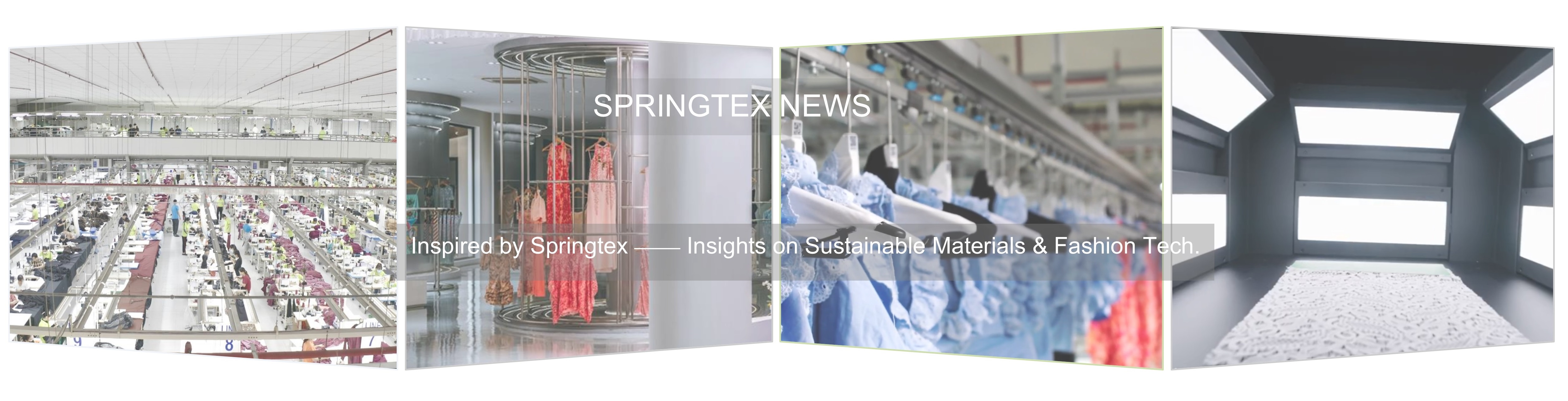
The Ultimate Guide to Apparel Manufacturing for Modern Fashion Labels
Launching and scaling a contemporary fashion brand is an exhilarating pursuit. Yet, many visionary designers quickly realize that the true battlefield of fashion isn't the runway or the Instagram feed—it is the supply chain. Finding an production framework that balances ethical craftsmanship with commercial speed separates enduring cultural mainstays from short-lived trends.
For emerging independent labels and enterprise fashion brands alike, navigating the world of professional apparel manufacturing requires a solid grasp of tech packs, material sourcing, and factory workflow structures. This comprehensive guide lifts the curtain on modern garment production, revealing how partnering with a cutting-edge clothing manufacturer like Springtex acts as the definitive catalyst for your brand’s commercial success.
Phase 1: Deconstructing the Blueprint (The Tech Pack)
Before a single yard of fabric is unrolled, your design must be translated into a precise technical language. A tech pack is a comprehensive blueprint detailing every structural component of your garment.
A production-ready tech pack must include:
Detailed Technical Sketches: Multi-angle vector illustrations showing flat construction details.
A Bill of Materials (BOM): An exhaustive list specifying fabrics, lining, threads, labels, zippers, and buttons.
Graded Size Specification Sheets: Point-of-measurement charts defining dimensions across your entire sizing curve (e.g., XS to XXL).
Stitching Details: Specific instructions on stitch-per-inch (SPI) counts, seam types, and seam allowances.
Without an airtight tech pack, a production facility is left to fill in the blanks using guesswork. This is where costly sampling mistakes occur. Top-tier manufacturers solve this problem by assigning a dedicated technical fashion designer to your account. This expert reviews, optimizes, and modifies your tech pack patterns to ensure flawless execution before manufacturing begins.
Phase 2: Sourcing Fabrics and Sample Development
Once the blueprints are locked in, production transitions to the sourcing phase. Material selection shapes both the drape of your clothing and your profit margins.
Modern labels must balance aesthetic appeal with fabric functionality, colorfastness, and sustainability metrics. For example, a high-end streetwear label might require customized, heavy-ounce French Terry cotton dyed to a specific Pantone shade, while an activewear startup might demand high-performance recycled nylon blends with specialized moisture-wicking coatings.
THE SAMPLING TIMELINE
Proto Sample --> Verifies fit, silhouette, and
basic pattern execution.
Pre-Production --> The absolute final benchmark
(PP) Sample constructed with actual fabrics.
Never skip the sample stage to accelerate a launch. Reviewing physical samples allows you to evaluate how fabrics perform under real-world conditions, ensuring your final retail run matches your original vision perfectly.
Phase 3: Mass Production and Quality Control
When you sign off on your Pre-Production (PP) sample, the factory begins mass manufacturing. This highly organized sequence scales your design into hundreds or thousands of uniform garments.
Fabric Inspection --> Precision Grading & Cutting --> Panel Assembly (Sewing) --> Finishing & Pressing
Fabric Inspection: Raw textiles are rolled out on automated inspection tables to screen for weaving flaws or color variances before cutting.
Precision Cutting: Digital grading software organizes your pattern pieces into high-efficiency layouts to minimize fabric waste, and computerized cutting systems slice through fabric layers with micro-millimeter precision.
Panel Assembly: Garments move through specialized production lines where operators use industrial overlock, cover-stitch, and flatlock machines to piece the clothing together.
Finishing & Pressing: Finished items are carefully steamed, trimmed of loose threads, tagged, and packed for distribution.
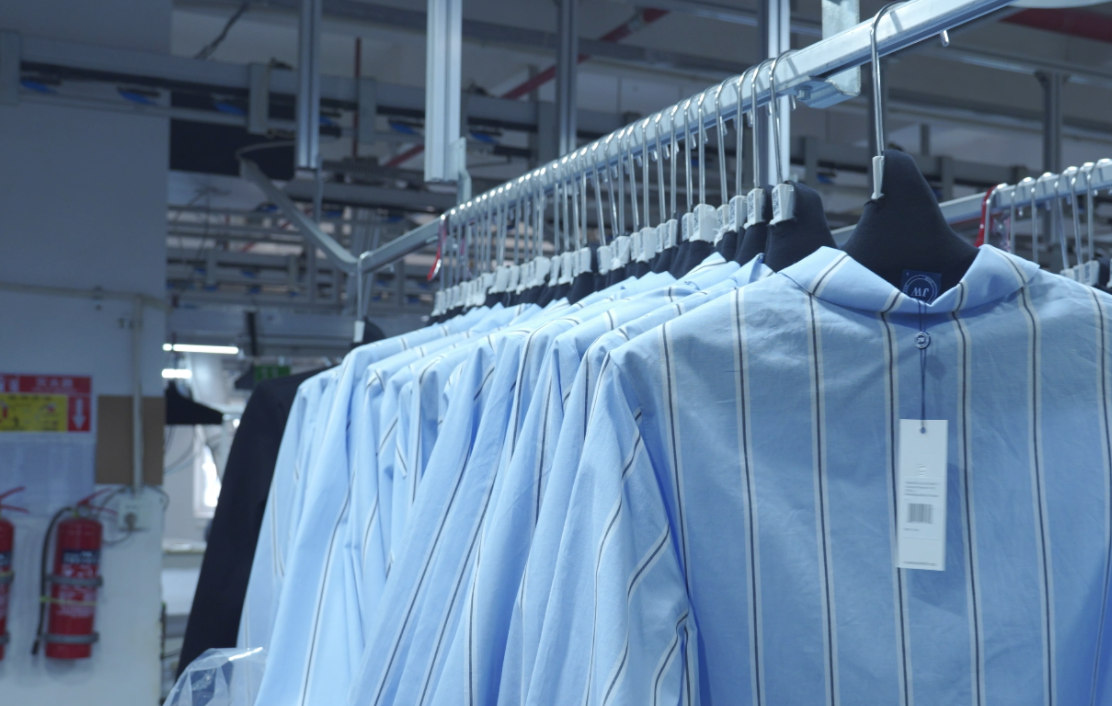
Maintaining consistency across massive production runs requires strict quality control systems. Industry-leading factories employ the Acceptable Quality Limit (AQL) framework. This mathematical sampling system systematically flags and eliminates construction flaws before your order ever boards a shipping vessel.
Phase 4: Choosing Between FPP and CMT Production
When evaluating potential manufacturing partners, your business model will largely dictate whether you opt for Full Package Production (FPP) or Cut, Make, Trim (CMT) manufacturing.
Manufacturing Model | What You Provide | What the Factory Handles | Best For |
CMT (Cut, Make, Trim) | Raw fabrics, patterns, tech packs, and trims. | Cutting, sewing, final assembly, and packaging. | Established brands with complex independent supply chains. |
FPP (Full Package) | Creative ideas, rough sketches, or base concepts. | Fabric sourcing, pattern making, prototyping, and mass manufacturing. | Growing labels seeking a streamlined, end-to-end partner. |
For brands looking to optimize overhead and avoid managing separate logistics vectors, a comprehensive partner like Springtex delivers full-service FPP support. This gives your creative team the freedom to focus entirely on marketing and community building.
Navigating the Future of Fashion
The landscape of modern retail moves fast, making production reliability the ultimate competitive advantage. Brand loyalty is won or lost on the structural integrity of your seams, the premium feel of your fabrics, and your ability to restock hit items before a trend fades.
By building a transparent, agile, and technically advanced alliance with an elite clothing manufacturer, your fashion label secures the foundation it needs to transform creative inspiration into an enduring retail legacy. Invest heavily in your preparation, value transparent communication, and select an apparel manufacturing partner that treats your brand's growth as their own.
References
l Bubicz, M. E., Barbosa-Póvoa, A. P. D. F., & Carvalho, A. (2021). Social sustainability management in the apparel supply chain. International Journal of Production Economics, 232, 107930. https://doi.org/10.1016/j.ijpe.2020.107930
l Modern Fashion Association. (2026). Understanding AQL 2.5 Protocols in Global Garment Inspection Workshops. Fashion Logistics Quarterly, 14(2), 45-51.
Fatal error: Allowed memory size of 134217728 bytes exhausted (tried to allocate 16718136 bytes) in /www/wwwroot/springtex.com/include/pdo.class.php on line 54