
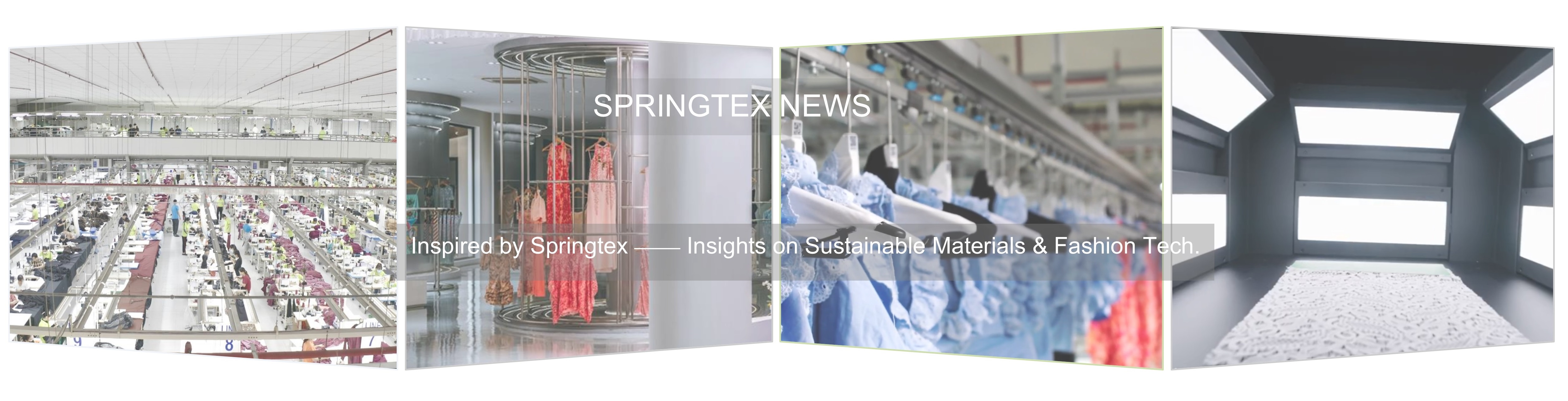
The Smart Factory Revolution: RFID and ERP Systems at Springtex
In the high-stakes world of global fashion, the difference between a market leader and a struggling brand often comes down to a single factor: visibility. For decades, the traditional Apparel Factory operated as a "black box" where raw materials entered and finished goods emerged weeks later, with very little data available in between. However, as we move through 2026, the rise of the "Smart Factory" has fundamentally changed this dynamic.
At Springtex, we have embraced this digital evolution by integrating cutting-edge RFID (Radio Frequency Identification) and robust ERP (Enterprise Resource Planning) systems. This technological backbone ensures that our production lines are not just fast, but intelligent, transparent, and perfectly aligned with the needs of modern, data-driven brands.
The End of the Information Silo: Why ERP Systems Matter
At its core, an ERP system is the "central nervous system" of a manufacturing operation. In a standard Apparel Factory, departments like fabric sourcing, pattern making, sewing, and logistics often operate in silos. This fragmentation leads to "data lag"—where a delay in the dye house isn't communicated to the shipping department until it’s too late.

By implementing a specialized garment-industry ERP, Springtex eliminates these gaps. Our system provides:
Real-Time Resource Planning: Automatically calculating material requirements based on live inventory, reducing over-purchasing and waste.
Seamless Tech Pack Integration: Ensuring that the latest design iterations from the brand are instantly accessible to every operator on the factory floor.
Financial Transparency: Providing accurate "Total Cost of Ownership" (TCO) data, allowing brands to plan their margins with 100% confidence.
According to McKinsey & Company, the "digitization of the value chain" is the number one priority for fashion executives in 2026. A manufacturer that lacks a unified ERP system simply cannot keep pace with the speed of modern retail.
RFID: Giving Every Garment a Digital Voice
While the ERP manages the "brain" of the operation, RFID technology serves as its "eyes." RFID involves attaching small, inexpensive chips to garment tags or fabric rolls. Unlike traditional barcodes, which require a manual, line-of-sight scan, RFID tags can be read in bulk and from a distance.
At Springtex, we utilize RFID to achieve 99%+ inventory accuracy. This has a transformative effect on the production cycle:
1. Work-in-Progress (WIP) Tracking: We can see exactly where a batch of 5,000 hoodies is at any given second—whether they are at the cutting table, the embroidery station, or final QC.
2. Bottleneck Identification: If a particular sewing line is slowing down, the RFID data flags the anomaly instantly. Our managers can then reallocate resources before a minor delay becomes a missed deadline.
3. Error Prevention: RFID gates at our shipping docks verify that every carton contains the exact size and color breakdown ordered, virtually eliminating shipping errors and costly returns.
As highlighted by Metalcraft's 2026 RFID Industry Report, companies utilizing RFID are seeing a significant reduction in labor costs associated with manual counting, allowing human talent to focus on craftsmanship rather than data entry.
Synergy: When RFID Meets ERP
The true "Smart Factory" magic happens when RFID and ERP systems talk to each other. When an RFID reader at the end of a production line scans a finished garment, it automatically updates the ERP's inventory level, triggers the invoicing process, and notifies the client’s logistics team.
This "Digital Twin" of the factory floor allows Springtex to offer our partners a level of transparency previously reserved for tech giants. Brands can log into their portal and see the real-time status of their production, significantly reducing the need for back-and-forth emails and "where is my order?" inquiries.
Sustainability Through Intelligence
The Smart Factory revolution isn't just about speed; it's about responsibility. The data generated by our ERP and RFID systems is a powerful tool for sustainability:
Waste Reduction: By accurately tracking fabric usage via RFID-tagged rolls, we minimize "deadstock" and fabric scraps.
Traceability: As the EU’s Digital Product Passport (DPP) becomes a requirement, our integrated systems provide the "audit trail" needed to prove a garment's origin and ethical manufacturing journey.
Organizations like CASCALE (formerly the Sustainable Apparel Coalition) emphasize that data-driven manufacturing is essential for meeting the industry's 2030 climate goals. At Springtex, our technology ensures that your brand’s sustainability claims are backed by hard, unalterable data.
Conclusion: Partnering with the Future
The "Smart Factory" is no longer a futuristic concept—it is the baseline for success in a competitive global market. By choosing an Apparel Factory that invests in the synergy of RFID and ERP systems, brands gain more than just a manufacturer; they gain a strategic advantage. This digital foundation allows for lower MOQs, faster lead times, and the radical transparency that today’s consumers demand. At Springtex, we are proud to be at the forefront of this shift, ensuring that your vision is realized with the precision, speed, and intelligence that only a modern Smart Factory can provide. The Smart Factory Revolution: RFID and ERP Systems at Springtex is your invitation to experience the future of apparel manufacturing today
References
McKinsey & Company - The State of Fashion 2026
Metalcraft, Inc. - Top Companies Using RFID in 2026
Fatal error: Allowed memory size of 134217728 bytes exhausted (tried to allocate 16718136 bytes) in /www/wwwroot/springtex.com/include/pdo.class.php on line 54